How much does a concrete driveway cost in Georgetown?
A Georgetown driveway runs past a flatwork-only quote because the base is built for the actual ground. A rocky lot can mean cutting and keying into limestone or caliche; a clay lot means a conditioned, compacted base and a reinforcement grid. As a starting point, standard residential driveways land around $8 to $14 per square foot, more for decorative finishes or a heavy tear-out. After that it moves with square footage, thickness, finish, and demolition. We put a price on it once we have stood on the site, not blind over the phone.
How do you keep a driveway from cracking in Georgetown?
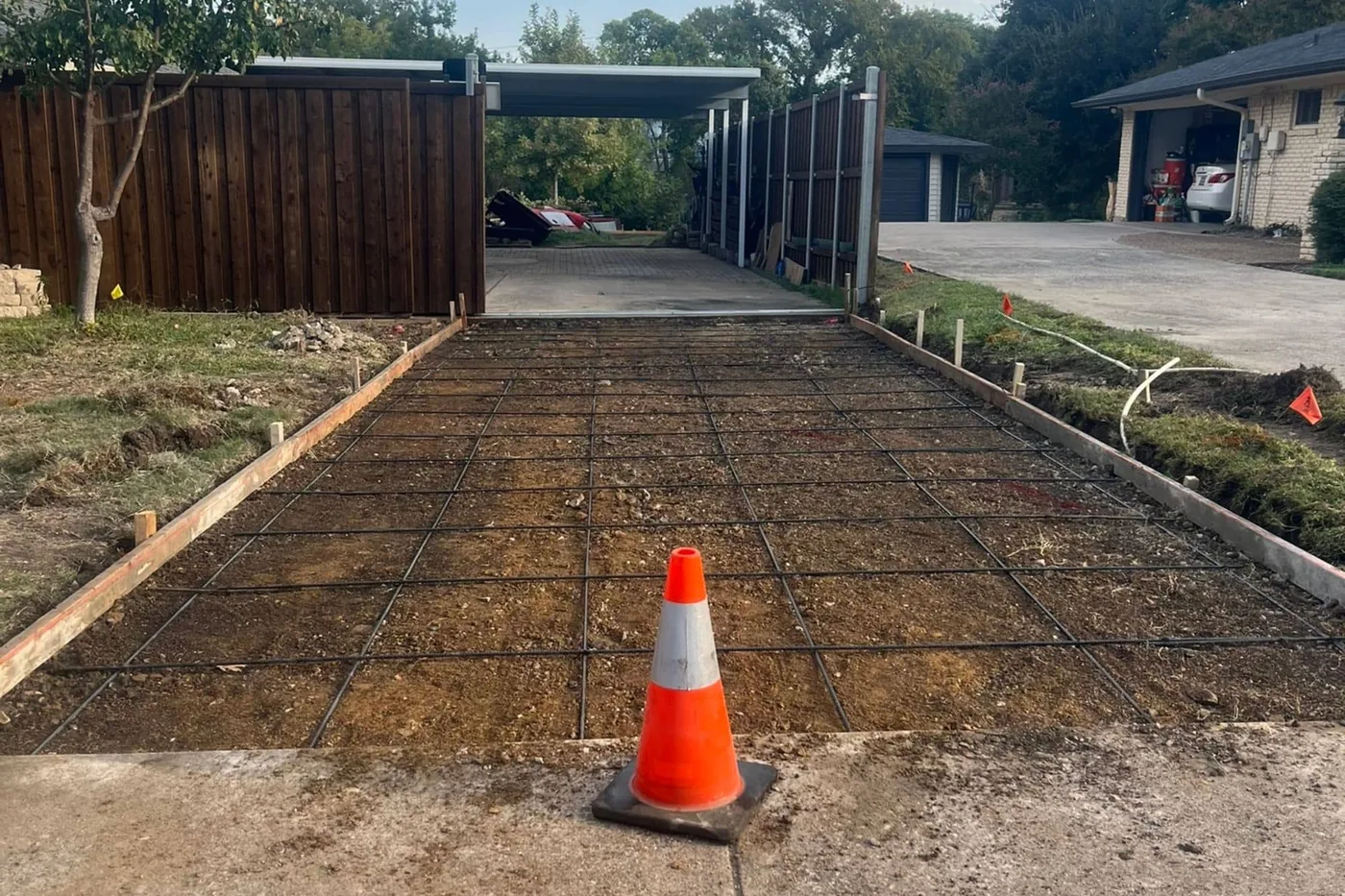
It begins with fitting the base to the ground. On shallow rock we key in a level bearing surface; on clay we condition and compact so shrink-swell soil cannot heave the slab from below. Over either one, a reinforcement grid and a deliberate joint plan route the movement that does occur into the lines we set.
Why do so many driveways crack around Georgetown?
Most of the time it is the ground rather than the concrete. Toward the prairie the clay puffs up after rain and pulls in during drought, so a thin slab on an unprepared base spans soil that will not stay put. Toward the plateau an uneven rock or caliche surface left unleveled lets a slab teeter and split. We settle the cause at the base, then guide the rest into joints.
How thick should a concrete driveway be?
Usually 4 to 6 inches for everyday passenger vehicles, deeper for RVs or heavy trucks. We size it to what you actually park and to how lively the ground beneath is, rather than stamping one number onto every lot.
When can I drive on a new concrete driveway?
Foot traffic comes first and vehicles after, since concrete keeps strengthening long past the point it looks done, and a summer pour has to cure instead of bake. We give you the specific dates for your pour at the start.
Can you tear out and replace my old driveway?
Yes. Demo, haul-off, and a fresh pour, priced as a single job. An old slab that has cracked down the middle or teeters at a corner usually points to a base that ignored the rock or the clay underneath, and we set that right on the rebuild.